What is the Toll Regulatory Board (TRB)?
The Toll Regulatory Board (TRB) is a Philippine government agency that regulates all toll roads in the Philippines. Many people simply call it TRB. It works under the Department of Transportation (DOTr) and ensures that expressways remain safe, fair, and well-managed for every driver.
TRB stands for Toll Regulatory Board. Its main job is to balance the interests of private companies that build and operate toll roads with the needs of ordinary Filipino motorists. Whether you are driving on NLEX, SLEX, or Skyway, the TRB makes sure you get convenient travel, safe roads, and reasonable toll fees.
Evolution and History of TRB
The TRB was created in 1977 through Presidential Decree No. 1112, also known as the Toll Operation Decree. At that time, the government needed to build better roads but did not have enough money. So they allowed the private sector to build and operate toll facilities under government supervision.
Over the years, the TRB has gone through many changes. It has been attached to different departments — from the Department of Public Works and Highways to the Office of the President, and now it is under the DOTr. This evolution shows how the agency has adapted to the growing needs of the country’s infrastructure, including improvements to Motorcycle Registration services.
Mandate, Mission, and Quality Policy
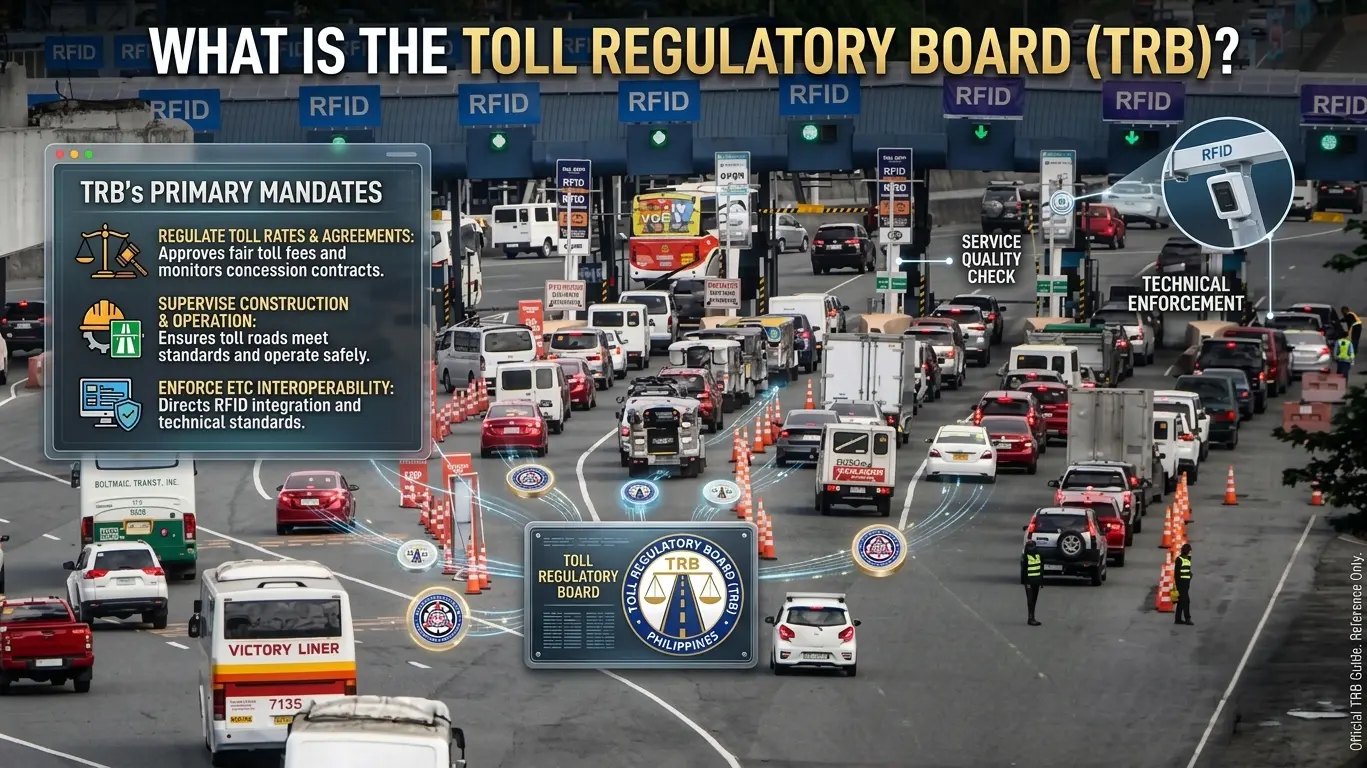
The mandate of the TRB is to supervise and regulate the construction, operation, and maintenance of toll facilities. Its mission is to provide safe, reliable, and convenient travel for all road users while ensuring fair returns for investors.
The agency follows a clear Quality Policy and has officially adopted Web Content Accessibility Guidelines (WCAG 2.0) under the iGovPhil Project to make its services more accessible to the public.
Key Powers, Functions, and Roles of TRB**
The Toll Regulatory Board has very important roles and responsibilities. Its main function is to regulate all toll roads in the Philippines.
Construction and Operation Oversight
TRB supervises the construction, operation, and maintenance of toll facilities. It ensures that private companies follow strict standards so that roads remain in good condition. The agency has the power to construct a network of toll facilities across the country.
Toll Rate Regulation and Adjustments
One of the most important jobs of TRB is setting toll rates. It carefully studies inflation, maintenance costs, and other factors before approving any increase in toll fees. All rate changes must be published in newspapers for transparency. This helps control toll regulatory board toll fee and keeps fees reasonable for drivers.
Regulating Operators and Property Condemnation
TRB gives permits to toll road operators and makes sure they follow the rules. It can also acquire private property for public use when needed for new road projects.
Emergency Measures and Exemptions
In times of emergency, the TRB can take necessary actions to protect public safety. Some government vehicles on official duty are also exempted from paying toll fees.
TRB Organizational Structure, Leadership, and Funding
Board Members and Leadership
The TRB is headed by an Executive Director. Currently, Atty. Alvin Carullo serves in this role (previously handled by Jose Arturo Tugade). The board includes representatives from key government agencies like the National Economic and Development Authority (NEDA) and the Department of Public Works and Highways.
TRB also maintains an official directory of officials. Many people search for TRB careers and hiring opportunities because the agency regularly posts job openings for qualified Filipinos.
Agency Funding and Oversight
The Department of Transportation (DOTr) manages and oversees toll roads in the Philippines through the TRB. Funding comes from fees paid by toll operators and government budget allocations. This allows the TRB to perform proper oversight and regulations.
TRB and Public-Private Partnerships (PPP)
The TRB plays a vital role in Public-Private Partnerships. Through PPP, the government allows private companies to build and maintain toll roads. The TRB ensures that these projects establish viable toll roads and facilities built by the private sector, but still regulated and supervised by the government. This model has helped develop the entire Philippine Luzon expressway network, connecting areas from Baguio to Batangas and Cavite.
TRB-Accredited Toll Road Operators & Networks
The Luzon Expressway Network
The TRB oversees major expressways that connect different parts of Luzon, including TPLEX and other important routes.
Major Tollway Systems and Rates
TRB regulates the following major tollways:
– NLEX (North Luzon Expressway)
– SLEX (South Luzon Expressway)
– Skyway System (including Skyway Stage 3)
– SCTEX
– MCX
People often search for toll regulatory board SLEX, SLEX rates, NLEX toll fees, and Skyway toll rates. The TRB makes sure these rates remain fair and transparent.
Digital Initiatives, Modernization & Expressways Rules
Electronic Toll Collection (ETC) System
The TRB is pushing hard for a modern Electronic Toll Collection (ETC) System in the Philippines. This includes RFID stickers and cashless payments to reduce long queues at toll plazas. The official TRB website philippines provides updates on these new systems.
Understanding Vehicle Classes for Tollways
Toll rates depend on vehicle classes. The TRB has clear rules about which class your vehicle belongs to so that you pay the correct fee.
Speed Limits and Safety Regulations
All toll expressways have strict speed limits in Philippine toll expressways. Following these limits keeps everyone safe.
Complaints Management and Traffic Violations
The TRB handles many complaints from motorists — such as wrong toll deductions, poor road conditions, or sudden rate increases. If you have an issue, you can file a complaint with the TRB. Many people also search “where can you contest an alleged traffic violation” related to tollways.
Future Plans and Ongoing Tollway Projects
The TRB has a clear vision for the future. It aims to expand the toll road network to Visayas and Mindanao, improve interoperability of ETC systems, and build smarter, greener expressways. Many future plans and ongoing projects are in the pipeline to make travel faster and more convenient across the country.
How to Contact or Reach the TRB Office
If you need assistance, here is the latest contact information:
– TRB Office Address: 16th Floor, Primex Tower, EDSA corner Connecticut Street, Greenhills, San Juan City, NCR 1502
– Toll Regulatory Board Contact Number: Check the official website for updated hotlines
– Email Address: Available on the TRB website
– Official Website: [www.trb.gov.ph](https://trb.gov.ph)
You can visit the TRB San Juan City office or use their online channels for complaints and inquiries.
Summary & Conclusion
The Toll Regulatory Board (TRB) Philippines is a very important government agency that works quietly behind the scenes to keep our toll roads safe, reliable, and fair. From setting reasonable toll fees to regulating big operators like NLEX and SLEX, the TRB plays a central role in the country’s infrastructure development.
Whether you want to know about toll rates, file a complaint, or understand how toll roads are managed, the TRB is there to serve the public interest. As the Philippines continues to grow, the TRB will keep playing a bigger role in building a better and more connected road network for all Filipinos.