LTO Certificate of Registration Sample 2026: OR/CR Sample, Format & Complete Guide
If you own a vehicle in the Philippines, one document you should always keep is your LTO Certificate of Registration (CR). This document proves that your vehicle is legally registered with the Land Transportation Office (LTO). Whether you drive a car, motorcycle, van, SUV, truck, or any other motor vehicle, having a valid CR is required.
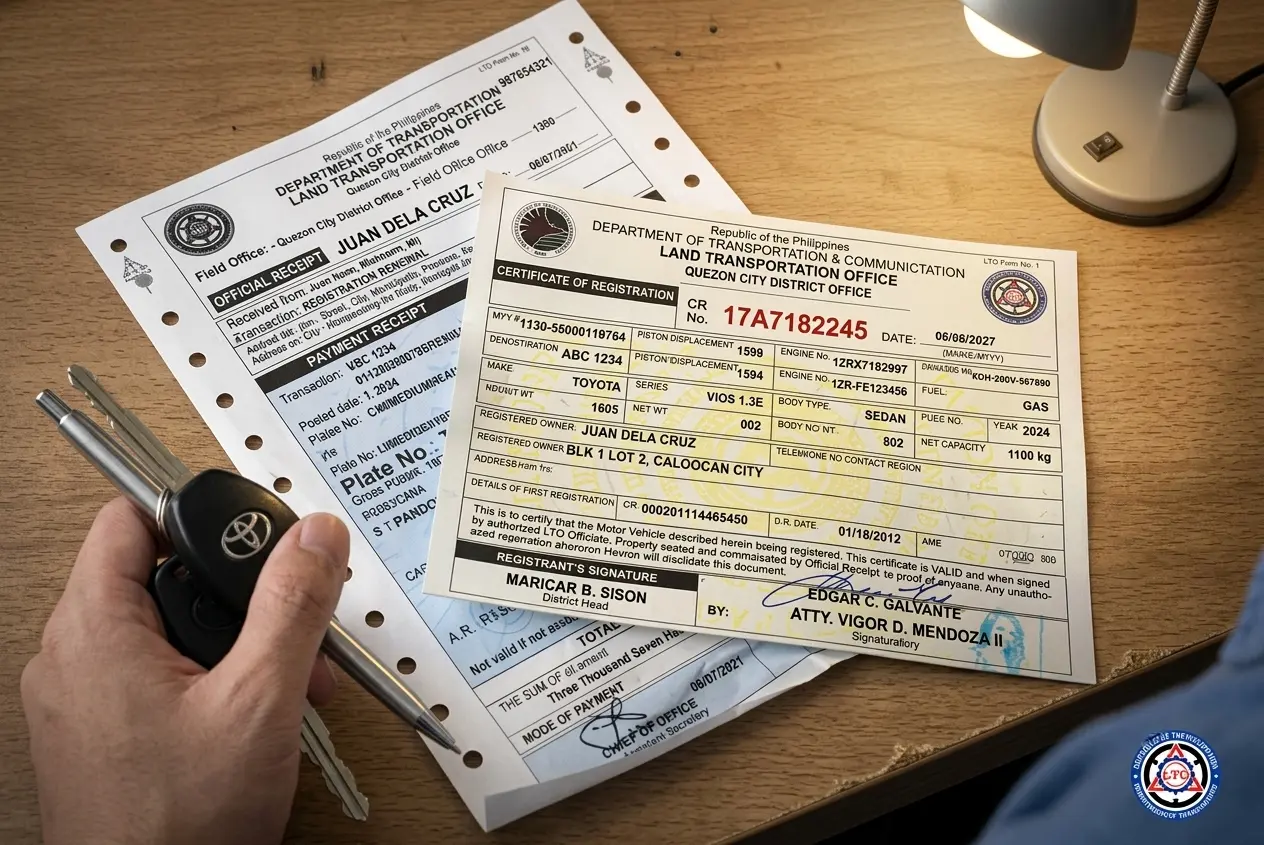
Many people search for an LTO Certificate of Registration sample to understand what the document looks like and what information it contains. Some want to compare the old and new CR formats, while others check an OR/CR sample before buying a second-hand vehicle.
In recent years, the LTO introduced a new Certificate of Registration format. The updated version has a cleaner design, better security features, and more detailed vehicle information. It also makes it easier for vehicle owners, buyers, insurance companies, and law enforcement officers to verify registration details.
This guide explains everything you need to know about the LTO Certificate of Registration (CR). You’ll learn what it is, why the format changed, the difference between the old and new CR, and the extra information included in the latest version.
What Is an LTO Certificate of Registration (CR)?
The LTO Certificate of Registration (CR) is an official document issued by the Land Transportation Office (LTO) after a vehicle is successfully registered. It confirms that the vehicle is recorded in the LTO database and is allowed to operate on public roads as long as its registration is valid.
The CR contains important details about both the vehicle and its registered owner. LTO officers and traffic enforcers use this information to verify ownership and registration during inspections or checkpoints.
A standard LTO Certificate of Registration usually includes:
Many people confuse the Certificate of Registration (CR) with the Official Receipt (OR), but they serve different purposes.
Both documents are important and should be kept together inside the vehicle. You may be asked to present them during traffic inspections or other official transactions.
If you’re buying a used vehicle, always check the CR carefully. Make sure the owner’s name, engine number, chassis number, and plate number match the actual vehicle. This simple step can help you avoid buying a vehicle with incorrect or fake documents.
Why Did LTO Change the CR Format?
The Land Transportation Office updated the Certificate of Registration (CR) to make it more secure, organized, and easier to read.
The older version had limited space and did not include enough technical information for modern vehicle registration. As vehicle records became more detailed, the LTO introduced a new layout that provides clearer and more complete information.
The updated CR also supports better record management and helps reduce registration errors.
The new format offers several benefits:
The updated design makes it easier for vehicle owners, buyers, insurance providers, and government agencies to verify important registration details.
Old CR vs New CR: What’s the Difference?
The old and new Certificates of Registration serve the same purpose, but the latest version includes several improvements that make it easier to understand and verify.
Old CR Format
The older Certificate of Registration had a simple layout with fewer vehicle details. While it was accepted for registration purposes, the information was less organized and some technical details were missing.
Common features of the old CR include:
Although it worked well for many years, the older format became less practical as vehicle registration requirements changed.
New CR Format
The updated LTO Certificate of Registration has a cleaner and more organized design. Vehicle and owner information is grouped into clear sections, making the document easier to read.
Key improvements include:
The new format also helps reduce errors during registration, renewal, and ownership transfer.
Additional Information Added to the New CR
One of the biggest improvements in the updated Certificate of Registration is the inclusion of more detailed vehicle information.
Depending on the vehicle, the new CR may include:
These extra details make it easier to identify a vehicle and verify that the information matches official LTO records.
If you’re buying a second-hand vehicle, compare the engine number and chassis number on the vehicle with the information shown on the CR. This helps protect you from registration fraud and ownership disputes.
Information Removed from the New CR
While the updated CR includes more useful information, the LTO also removed or reorganized some older fields to make the document easier to read.
Instead of repeating unnecessary details, the new layout focuses on the most important information needed to identify the vehicle and its registered owner.
This improved design offers several advantages:
Overall, the new Certificate of Registration is easier to understand and supports today’s vehicle registration system more effectively.
LTO OR/CR Sample Breakdown
Many people search for an LTO OR/CR sample to understand what the document looks like and what each section means. This is especially helpful if you’re registering a new vehicle, buying a used one, or checking your own registration details.
Although the layout may change slightly over time, the key information on the Certificate of Registration (CR) stays almost the same.
Header Section
The top part of the Certificate of Registration contains the basic registration details issued by the Land Transportation Office (LTO).
This section usually includes:
These details help identify the vehicle in the LTO database.
Owner Information
This section shows the person or company that legally owns the vehicle.
It normally includes:
Check this information carefully. Even a small spelling mistake can cause problems during registration renewal, ownership transfer, or insurance claims.
If your name or address has changed, update your records with the LTO as soon as possible.
Vehicle Information
This is one of the most important sections of the CR. It contains the vehicle’s identification and technical details.
Common information includes:
Always compare the engine number and chassis number on the vehicle with the details printed on the CR. They must match exactly.
If you’re buying a second-hand vehicle and the numbers don’t match, do not complete the purchase until the issue is resolved.
Registration Approval
The last section confirms that the vehicle has been officially registered by the LTO.
Depending on the CR version, this section may include:
This confirms that the registration was processed according to LTO requirements.
LTO OR/CR Sample Template (Blank Form or PDF)
Many vehicle owners look for an LTO OR/CR sample template, blank CR form, or LTO CR PDF SAMPLE 2026 online. These samples help you understand the document before receiving the official version.
A sample template is useful if you want to:
However, remember that a blank template is for reference only.
It cannot be used as an official Template original certificate of registration lto
Only the Land Transportation Office (LTO) can issue a valid CR after completing the registration process.
You may also find sample PDF files online, but they are not official documents. Avoid downloading or editing CR templates from unknown websites because they have no legal value.
If you need another copy of your Certificate of Registration, request it through the proper LTO process instead.
Who Needs the New LTO CR?
The updated LTO Certificate of Registration applies to almost every registered motor vehicle in the Philippines.
You may receive the new CR if you:
The new CR is issued for different types of vehicles, including:
If you own a business with company vehicles, make sure each vehicle has an updated Certificate of Registration.
When buying a used vehicle, always ask the seller to show both the official receipt blank form (OR) and the Certificate of Registration (CR). Before making payment, check that the owner’s name, plate number, engine number, and chassis number match the vehicle.
Temporary CR (2026 Update)
In some cases, the LTO may issue a Temporary Certificate of Registration (Temporary CR) while your permanent CR is still being processed.
This usually happens during certain registration transactions, such as:
A Temporary CR allows you to continue the registration process while waiting for the official document.
However, it is not a permanent replacement for the final Certificate of Registration.
Before driving, make sure your Temporary CR is still valid. You should also carry any required supporting documents, such as your Official Receipt (OR), if applicable.
Since LTO rules may change, always check the latest guidelines before using a Temporary CR. Following the current requirements can help you avoid delays, registration issues, or possible penalties.
How to Get Your LTO Certificate of Registration (CR)
Getting an LTO Certificate of Registration (CR) is part of registering a vehicle in the Philippines. Whether you own a brand-new vehicle or need to renew your registration, the Land Transportation Office (LTO) will issue a CR after your application is approved.
For a Brand-New Vehicle
If you buy a new vehicle from a dealership, the dealer usually handles the first registration for you. Once the process is complete, you’ll receive your Official Receipt (OR) and Certificate of Registration (CR).
The process usually includes:
Before leaving the dealership or LTO office, check your CR carefully. Make sure your name, plate number, engine number, and chassis number are correct.
For Annual Registration Renewal
Vehicle registration in the Philippines must be renewed every year based on the LTO renewal schedule.
During renewal, you may need to:
After approval, your registration records will be updated. Keep both your OR and CR in a safe place, as traffic officers may ask to see them during inspections or checkpoints.
How to Get a Copy of Your LTO CR Online
Many vehicle owners search for ways to get a copy of their LTO Certificate of Registration online, especially if the original document is lost or unavailable.
If your vehicle is linked to the LTMS Portal, you can check your registration details online.
The basic steps are:
- Log in to your LTMS Portal account.
- Open your vehicle records.
- Check if your registration information is available.
- Follow the instructions for your transaction.
Keep in mind that not all CR documents can be downloaded online. Available services depend on the latest LTO system and your type of transaction.
If an online copy is not available, visit the nearest LTO office and request a certified copy or apply for a replacement.
Tip: Avoid downloading CR files from unknown websites. Sample templates are only for reference and cannot replace an official LTO-issued Certificate of Registration.
How to Verify Your LTO Certificate of Registration
Checking your Certificate of Registration helps make sure your vehicle details match the official LTO records.
This is especially important if you are:
You can verify your CR by following these steps:
- Log in to your LTMS Portal account, if your vehicle is registered in the system.
- Compare the online information with your physical CR.
- Check that the owner’s name, plate number, engine number, and chassis number all match.
If you find any incorrect information, contact the Land Transportation Office as soon as possible.
When buying a second-hand vehicle, always compare the engine number and chassis number on the vehicle with the numbers printed on the CR. This simple check can help you avoid fraud.
How to Spot a Fake LTO Certificate of Registration
A fake Certificate of Registration can cause legal problems and make it difficult to transfer ownership. If you’re buying a used vehicle, inspect the CR carefully before making any payment.
Some common warning signs include:
You should also compare the information on the CR with the actual vehicle.
Check the:
If anything looks different, ask the seller for an explanation before completing the purchase.
For extra peace of mind, verify the vehicle through the proper LTO channels whenever possible. Taking a few minutes to check the documents can help you avoid scams and expensive legal issues later.
What If Your CR Has Wrong Information?
Sometimes, a vehicle owner finds mistakes on the Certificate of Registration (CR) after it has been issued.
Common errors include:
Do not ignore these mistakes. Incorrect details can cause problems during registration renewal, ownership transfer, insurance claims, Traffic Violation checks, or traffic inspections.
If you find an error, visit the LTO office that processed your registration. Bring your supporting documents and request a correction. Once the LTO verifies the information, they will update your records and issue the corrected document if needed.
Fixing errors early can save you time and prevent problems in future transactions.
How to Get a Duplicate CR (Lost or Damaged)
If your Certificate of Registration is lost, stolen, or badly damaged, apply for a replacement as soon as possible.
The process usually includes:
- Prepare a valid government-issued ID.
- Get an Affidavit of Loss if the CR was lost.
- Complete the required LTO application form.
- Submit all required documents.
- Pay the replacement fee.
- Wait for the LTO to process your request.
- Receive your duplicate Certificate of Registration.
If your CR is damaged but still readable, bring the original document when applying for a replacement.
After receiving the duplicate CR, check all the details before leaving the LTO office. Make sure your name, plate number, engine number, and chassis number are correct.
What Happens If You Drive Without Your CR?
Your Certificate of Registration (CR) is one of the most important documents you should carry while driving.
During checkpoints or traffic inspections, LTO officers or traffic enforcers may ask you to present both your:
If you cannot show these documents, you may face:
To avoid these issues, keep your OR and CR together in a waterproof folder inside your vehicle.
If your CR is lost or damaged, apply for a replacement immediately instead of driving without it.
Video: Understanding the New LTO CR
Watching a video is one of the easiest ways to understand the new LTO Certificate of Registration.
A good video guide can help you:
Keep in mind that some online videos may contain outdated information. Before following any advice, always check the latest LTO guidelines to make sure the information is still accurate.
Frequently Asked Questions (FAQs)
Conclusion
The LTO Certificate of Registration PDF (CR) is an important document for every vehicle owner in the Philippines. It proves that your vehicle is legally registered and contains key details about the vehicle and its owner.
The new CR format is easier to read and includes more complete vehicle information. This makes registration, renewal, inspections, and ownership transfers much smoother.
Always check your CR for mistakes after receiving it. If any information is incorrect, ask the LTO to correct it as soon as possible. If your CR is lost or damaged, apply for a replacement without delay.
Finally, keep your Official Receipt (OR) and Certificate of Registration (CR) together whenever you drive. Keeping these documents safe and updated will help you avoid problems during checkpoints, registration renewals, insurance claims, and future vehicle transactions.