Public Utility Vehicles (PUVs) in the Philippines: Meaning, Types, Rules, and Modernization
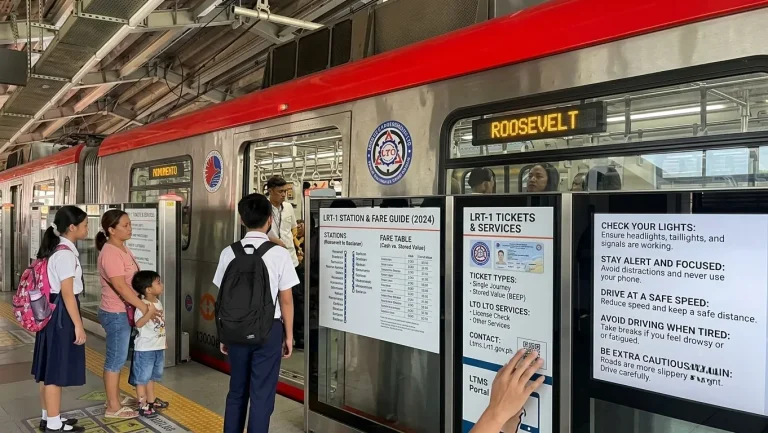
If you walk on the busy streets of the Philippines, you will hear loud engines and honks. This big network of rides is called the Public Utility Vehicles (PUVs) system. PUVs are very important for the country. They move millions of people every day. They take people to school, work, and the market.
Many people want to know the legal PUV meaning philippines to get a business license. Others just want to know how public transport works. This article covers everything in a simple way. We will look at the rules, history, types of vehicles, and new updates.
What Is a Public Utility Vehicle (PUV)?
A PUV vehicle is not a regular private car. It has a special job on the road.
Official Definition of a PUV
The official public utility vehicles definition is basic. A PUV is any motor vehicle that carries passengers or cargo for money. The general public utility vehicle meaning is that it is open to all people. It runs on fixed roads and charges fares set by the government.
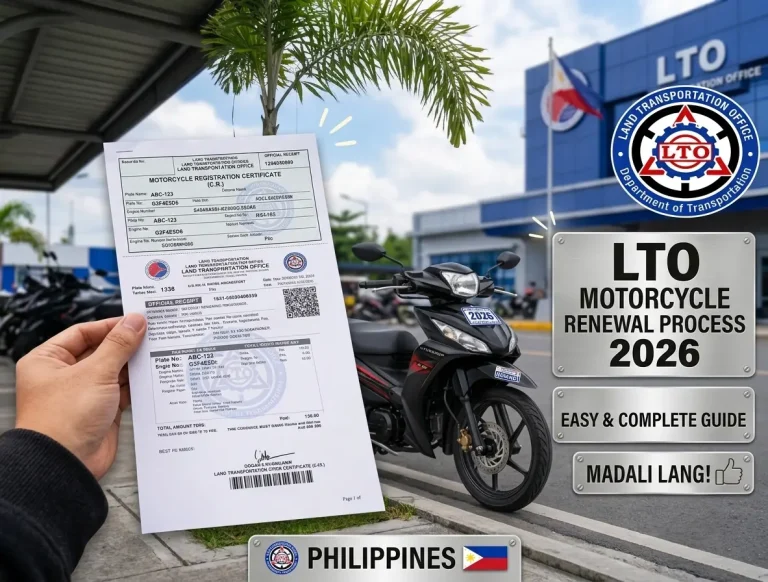
A private puv car becomes a public utility when the owner gets a government franchise. The meaning of public utility vehicles is all about public service and safety, which are also important during the LTO Renewal process.
PUV vs. Private Vehicles
The main difference between a PUV and a private vehicle is the rule and use.
[Private Car] ───> Personal Use ───> Normal Plate ───> No Franchise [PUV Vehicle] ───> Public Use ───> Special Plate ───> Needs Franchise
Driving a PUV is a huge job. A private driver only looks after their family. A public transport driver is responsible for many strangers on every trip.
Types of PUVs in the Philippines
There are many kinds of public utility vehicles the Philippines uses. Different areas use a different list of public utility vehicles in the Philippines for their roads.
Public Utility Jeepney (PUJ)
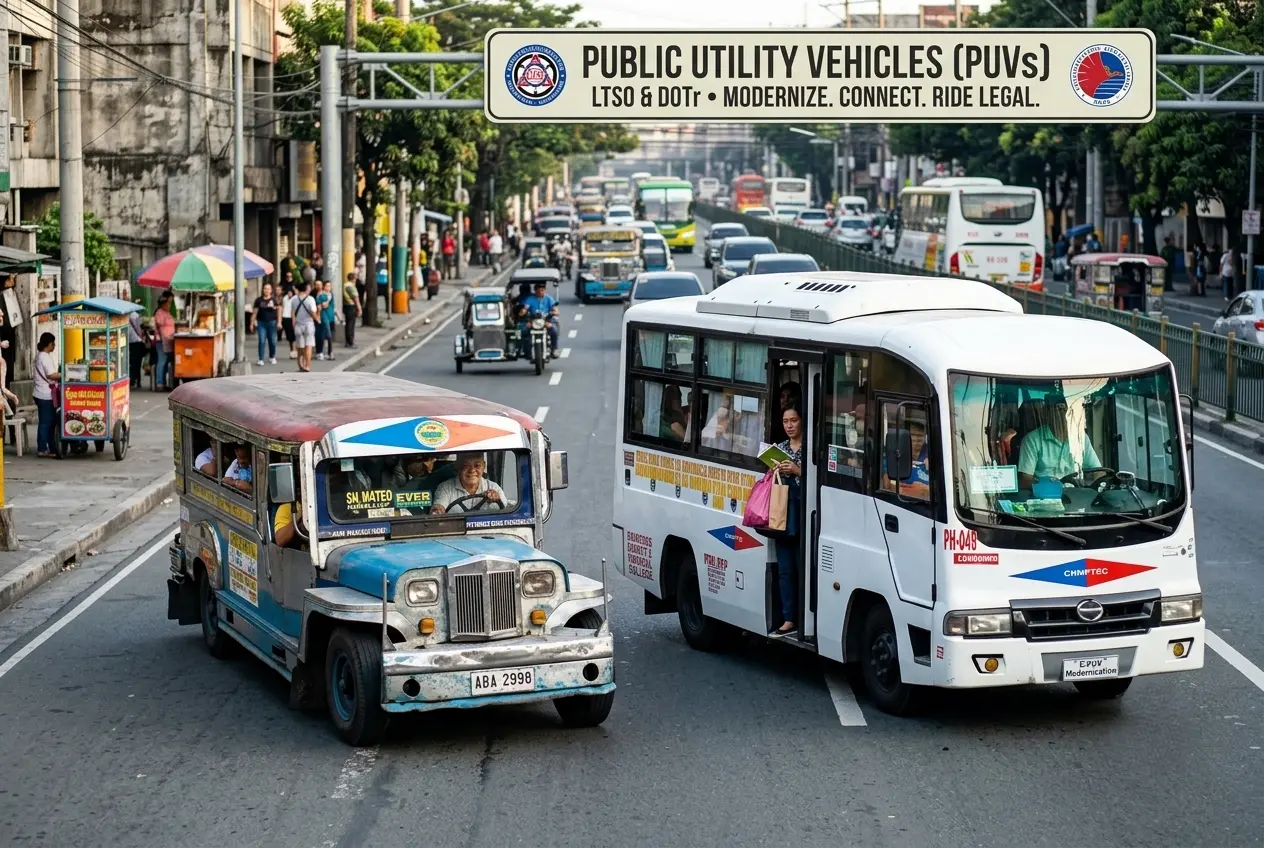
The public utility jeepney is a famous example of transportation here. These colorful vehicles carry 15 to 25 people. Passengers sit face-to-face. They run on fixed roads and stop to pick up people.
Public Utility Buses
Buses are best for long trips and big highways. These large vehicles hold many people. They move commuters between different cities. Some have open windows, and some have air conditioning.
UV Express Vans
The utility van, or UV Express, is a fast option with fewer stops. These are normal passenger vans. They take 10 to 18 people straight from one terminal to another.
Tricycles
A tricycle is a motorcycle with a sidecar. They are used for short trips inside small neighborhoods. They go where big buses or jeepneys cannot fit.
Taxis
Taxis give private rides for a single passenger. Taxis use a meter device to find the fare. The price depends on the distance and time in traffic.
Modern Jeepneys
Modern jeepneys look like small buses. They have high ceilings, side doors, and air conditioning. They are replacing old jeepneys on city roads.
Is a Tricycle a Public Utility Vehicle?
Many people ask: Is a tricycle a public utility vehicle?
The answer is yes. A commercial tricycle is a light PUV under local rules. They do not get a franchise from the national board. Instead, they get permits from local government units (LGUs). They are only for short, local roads.
History of PUVs in the Philippines
The history of public utility vehicles shows how people solve tough problems.
How Transport Started
Long ago, people used horse carts called calesas. In the early 1900s, trains and streetcars called tranvias started in Manila. Sadly, World War II destroyed those rails.
Growth of Jeepneys and Buses
In 1945, the war ended. American troops left behind many military jeeps. Smart local mechanics changed these jeeps. They made the back longer, added benches, and put on a roof.
[War Jeeps] ➔ [Longer Frame & Roof Added] ➔ [Traditional Jeepney]
This is how the traditional jeepney (PUJ) was born. Soon, private bus fleets also grew to connect big cities with provinces. Today, new programs are upgrading these vehicles to make them safer.
Why PUVs Are Important
Public transport is the foundation of daily life. Without PUVs, big cities would stop completely.
Low Cost
The best thing about PUVs is the low price. Most people cannot buy a private car. PUVs let students and workers travel long distances for cheap fares.
Helping the Economy
PUVs help the economy by bringing workers to their jobs every morning. Also, the transport sector gives jobs to many drivers and mechanics. It helps families earn money.
Less Traffic and Clean Air
An organized transport network offers a safe way to travel. It reduces the number of private cars on the road. Packing people into one bus or jeepney saves road space.
Who Controls Public Utility Vehicles?
Operating a transport business requires government permission. Two main agencies rule the transport industry.
AgencyMain FocusMain JobLTFRBBusiness and fares Gives franchises and sets ticket prices.LTOSafety and licenses.Registers cars and gives driving tests.
Role of the LTFRB
The LTFRB handles the business side. This agency issues permits and franchises to operators. A franchise is a legal paper that lets a vehicle work on a public route. The LTFRB sets standard fares so drivers cannot charge too much.
Role of the LTO
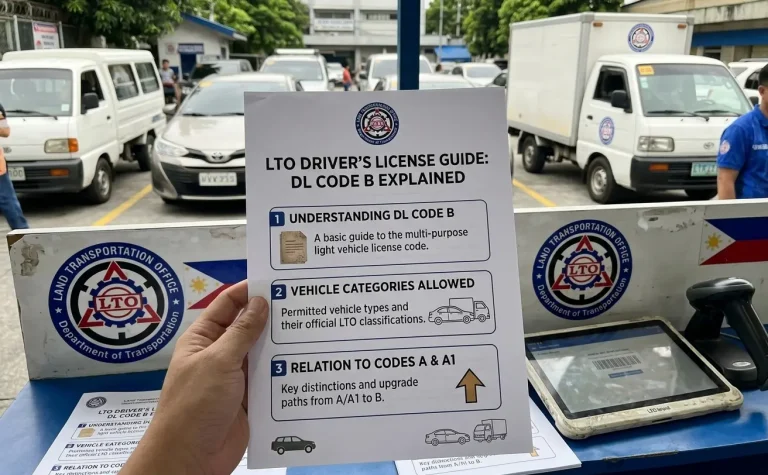
The LTO handles safety. The office focuses on the vehicle drivers and the cars. The LTO tests drivers, gives professional licenses, and checks vehicle smoke levels.
Franchise Requirements
To run a PUV, owners must pass a long test. Operators must show they have money, a parking garage, and valid insurance before they get a franchise.
Rules for Public Utility Vehicles
The government enforces strict LTO rules and regulations for safety on busy roads.
Driver Duties
Driving a PUV is a big responsibility. Professional drivers must fix their cars, stop only at proper zones, and care about safety over speed.
What is Banned: Under the vehicle law, drivers of public utility vehicles are prohibited from rejecting riders, cutting routes short, overloading the car, or racing on the street.
Safety Rules
Every public vehicle must pass safety checks. This means checking brakes, steering, lights, and tires. Vehicles must carry fire extinguishers and first-aid kits.
Speed Limiter Law
To stop fast driving, Republic Act 10916—the law that places speed limiter on big cars—requires all public buses to have a speed limiter. This tool stops the bus from going too fast.
Insurance and Smoking Rules
Every franchise holder must pay for passenger accident insurance. This helps riders pay medical bills if an accident happens.
Also, Executive Order No. 26 bans all smoking and vaping inside PUVs and terminals. Violators pay heavy cash fines.
Public Utility Vehicle Modernization Program (PUVMP)
The biggest change today is the Public Utility Vehicle Modernization Program (PUVMP).
[Old, Smokey Cars] ───> [PUVMP Transition] ───> [Modern Eco Mini-Buses]
What Is the PUVMP?
The public utility vehicle modernization program philippines launched is a plan to replace old, unsafe, and smoky PUVs with modern, clean options. The program updates the cars, the routes, and how passengers pay.
Why Old Jeepneys Are Going Away
Traditional jeepneys are cultural icons, but most are over 15 years old. Their old engines blow dangerous black smoke. Their back doors are unsafe in heavy traffic, and the low roofs are uncomfortable.
New Eco-Friendly Transport
The new program requires cars to be eco-friendly. These modern vehicles run on clean Euro-4 diesel or electric batteries (E-jeepneys). This stops air pollution and gives a cool, air-conditioned ride.
Modern PUVs also have:
Joining Cooperatives
Now, individual drivers must join larger transport groups or cooperatives. This change stops drivers from racing each other. Instead, drivers get a stable monthly salary.
Common Challenges for PUVs
The public transport system deals with everyday problems.
Colorum Public Utility Vehicles
Illegal transport is a huge problem for legal drivers.
What Is a Colorum Car?
A colorum public utility vehicles unit is an illegal ride. It operates without a valid franchise from the LTFRB. For example, a private car owner charging money for long trips is a colorum car.
Why It Is Illegal
Colorum rides are illegal because they skip safety rules. They do not have passenger accident insurance. If an accident happens, riders get zero help.
Penalties
The government punices colorum cars heavily. Illegal operators pay massive cash fines. Their cars are locked in impound lots for months, and their licenses are canceled forever.
Frequently Asked Questions
Conclusion
Public Utility Vehicles (PUVs) are the gears that keep the Philippine economy alive. From old post-war jeepneys to new eco-friendly mini-buses, the transport system is changing for the better. By enforcing strict rules and stopping illegal colorum rides, the country is creating a safer and cleaner travel experience for everyone.