What is a Colorum Vehicle and Why is it Illegal in the Philippines?
Have you ever heard someone call a vehicle “colorum” and wondered what it means? Maybe you saw it on the news, or a friend used the word and you nodded along without really knowing. You are not alone. Many Filipinos use this word every day, but few know its full meaning or why it matters so much.
In this guide, you will learn what colorum means, where the word came from, and why colorum vehicles are illegal in the Philippines. You will also learn about the fines, the risks to passengers, and how you can protect yourself from riding one by accident. By the end, you will understand DL Code B better than most people on the road.
Understanding the Colorum Meaning and Origin
What is the Meaning of a Colorum Vehicle?
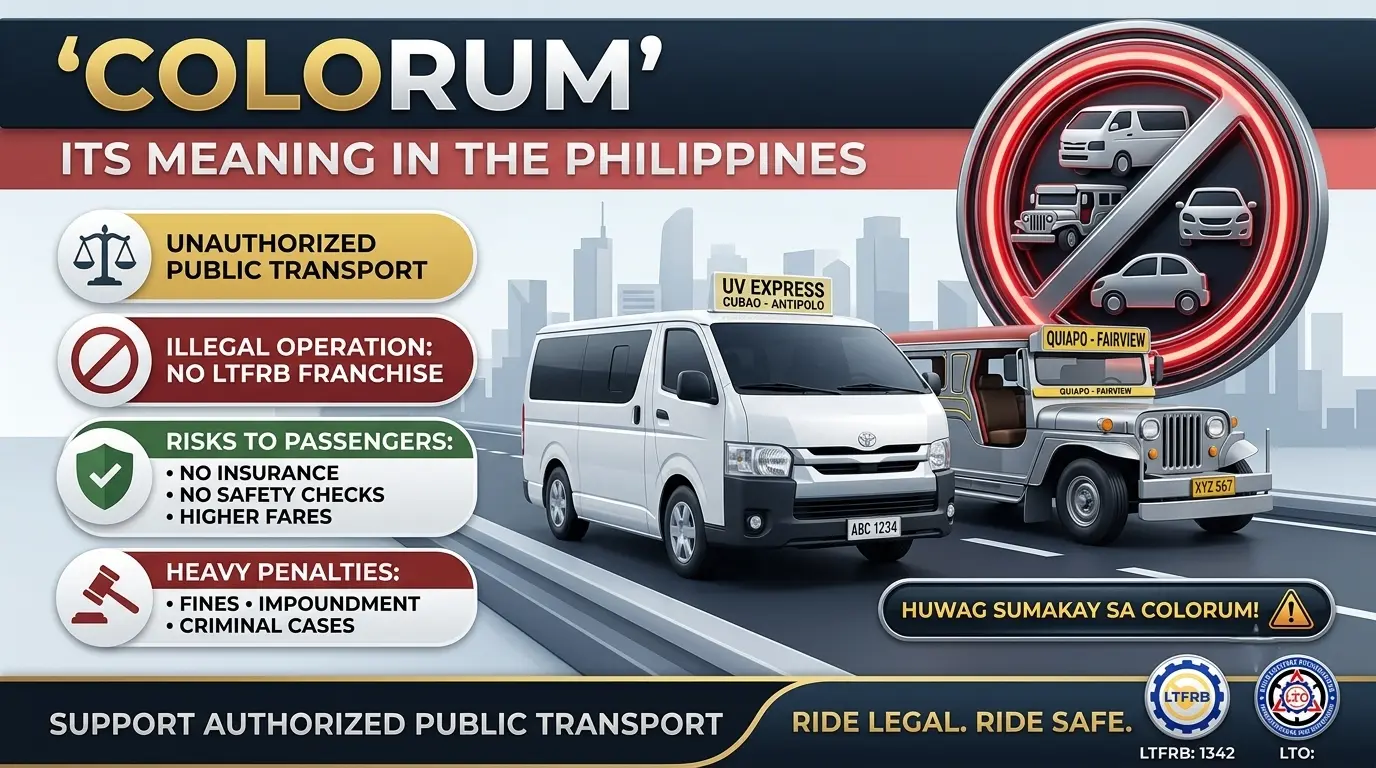
So, what is colorum? In simple terms, colorum means a vehicle that operates without a valid franchise or permit from the government. The colorum meaning applies to any car, van, or motorcycle used for public transport or paid services without proper legal documents.
A colorum vehicle meaning goes beyond just missing paperwork. It means the vehicle owner skipped the legal process needed to operate as a public transport unit. The government did not approve the vehicle to carry passengers or cargo for a fee.
Many people search for “colorum means” because the term confuses them at first. Here is the easiest way to think about it: if a vehicle picks up paying passengers but has no franchise, it is colorum. That is the meaning of colorum vehicles in one sentence.
This word is unique to Filipino culture. You will not find “colorum” used this way in other English-speaking countries. It has become part of everyday language, especially among drivers, commuters, and traffic enforcers.
What is the Origin of the Word Colorum? (Etymology and Slang)
The origin of the word colorum is interesting and goes back many years. Some language experts believe it comes from the Latin phrase “per omnia saecula saeculorum,” which means “forever and ever.” This phrase appears in old Catholic prayers, and Filipinos heard it often during Mass.
Over time, people in the Philippines began using “colorum” as slang. It described anything that seemed unofficial, fake, or done without proper authority. Since many early unauthorized vehicles operated quietly, almost like an “unofficial forever” routine, the word stuck.
Today, the colorum meaning slang use has grown beyond vehicles. You might hear “colorum” used to describe other unauthorized activities too. But in everyday Filipino language, the colorum meaning tagalog use almost always points back to transportation.
A common phrase you will hear is “colorum na sasakyan,” which means “an unregistered or illegal vehicle” in Tagalog. This phrase appears often in news reports and traffic warnings. Knowing this term helps you understand local news and conversations better.
You may also see different spellings online, such as kolorum, colorom, or colurum. These are simply common misspellings of the same word. No matter how it is spelled, the meaning stays the same: an unauthorized vehicle.
Common Types of Colorum Vehicles in the Philippines
Colorum vehicles come in many forms. Knowing the common types helps you spot one before you accidentally ride in it.
Colorum vans are one of the most common types. These vans often run between provinces, picking up passengers along busy highways without a proper franchise. The colorum van meaning simply refers to any van doing this without legal approval.
Colorum tricycles are also widespread, especially in smaller towns. The colorum tricycle meaning applies when a tricycle driver operates without a local government permit or franchise.
Colorum cars and automobiles show up in cities too. Drivers use private cars to offer ride-sharing or shuttle services without registering as a transport network vehicle. This falls under the colorum automobiles meaning.
Even motorcycles can become colorum vehicles if used for paid delivery or passenger services without the right permits. As delivery apps and ride-hailing grow in the Philippines, this type of violation has become more common.
Jeepneys and small buses can also fall under this category, especially in areas where public transport demand is high. Some drivers buy old jeepneys and run them on popular routes without ever applying for a franchise. Since these vehicles look similar to legal jeepneys, passengers often cannot tell the difference just by looking at them.
This is one reason colorum vehicles remain a problem across the country. They blend in so well with legal transport that most riders never realize they boarded an unauthorized vehicle until something goes wrong.
LTO and LTFRB Guidelines on Private Vehicles
LTFRB Guidelines on Colorum Vehicles vs. Legitimate Transport
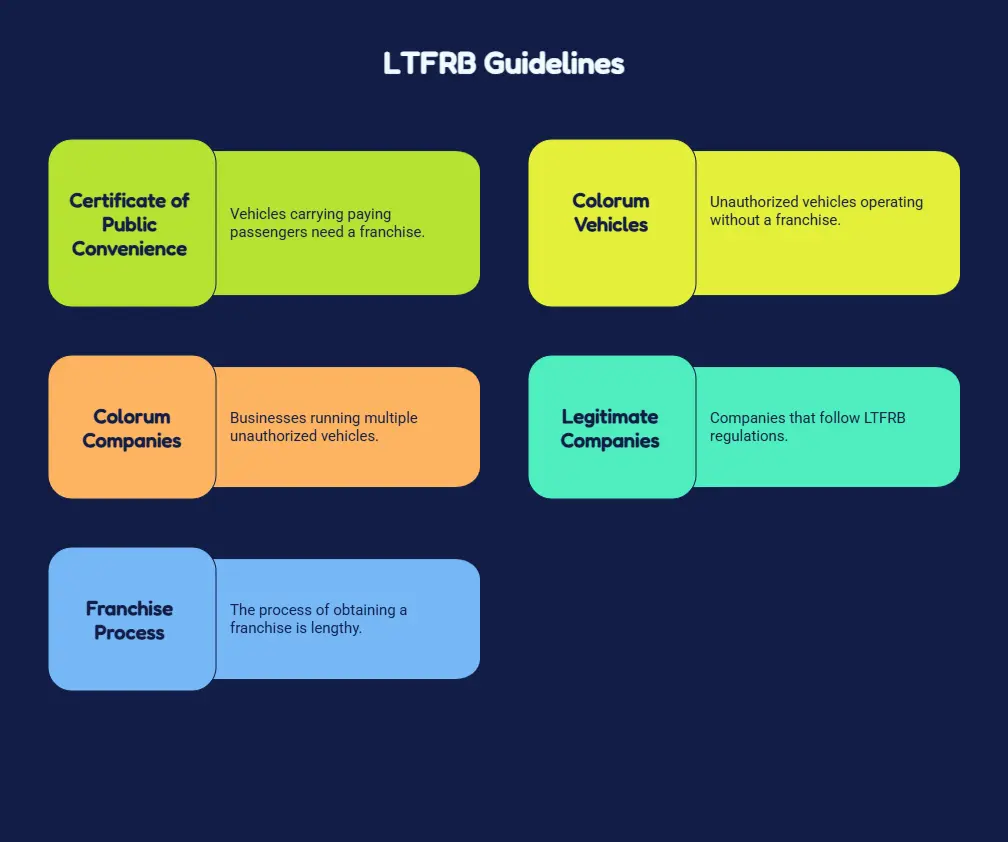
The Land Transportation Franchising and Regulatory Board, or LTFRB, controls who can operate public transport in the Philippines. The LTFRB guidelines on colorum vehicles are strict. Any vehicle carrying paying passengers needs a Certificate of Public Convenience, often called a franchise.
Without this certificate, the vehicle is breaking the law, no matter how clean or new it looks. The LTFRB checks documents, not appearances. This is why even nice-looking vans can still be colorum if they lack the right papers.
Some people also ask, “What is colorum company?” This usually refers to a business that runs several unauthorized vehicles under one name, often pretending to be a legal transport company. These setups are illegal and face heavier penalties because they operate at a larger scale.
Legitimate transport companies go through inspections, route approvals, and fare regulations. Colorum operators skip all of this, which puts passengers at risk and creates unfair competition for honest drivers.
Getting a franchise is not a quick process. Operators must submit documents, pass vehicle inspections, and prove they can safely run a transport service. This process can take weeks or months, which is why some operators choose to skip it entirely and run colorum instead. Unfortunately, this shortcut comes at the cost of passenger safety and fair business practice.
LTO Rules on Carpooling, Private Shuttles, and Deliveries
Not every private vehicle on the road breaks the law. The Land Transportation Office, or LTO, allows certain private uses without a franchise.
Carpooling among friends, neighbors, or coworkers is legal as long as no profit is involved. Sharing gas money is usually fine. The problem starts when a driver turns this into a paid, regular service.
Private shuttles for a single company, like an office van picking up only its own employees, are also generally allowed. The issue arises when that same van starts accepting outside passengers for a fee.
Many also ask about delivery work. Can you use a private motorcycle for delivery without a franchise? In most cases, yes, especially for app-based delivery services, since these usually fall under different rules than public passenger transport. However, requirements can change, so checking current LTO Portal and LTFRB rules before starting any delivery work is wise.
Colorum Violations, Fines, and Legal Penalties
LTO Colorum Violation Penalties for Operators and Owners
A colorum violation carries serious consequences. The LTO colorum violation Fee penalty includes hefty fines, and in many cases, the vehicle gets impounded right away.
Operators caught running colorum vehicles can face fines reaching tens of thousands of pesos, depending on the type of vehicle and how many times they have violated the law before. Repeat offenders face steeper fines and longer impoundment periods.
Beyond fines, owners may also lose their vehicle registration privileges temporarily. This makes it harder to operate any vehicle legally in the future, even outside public transport.
Colorum operation cases involving larger fleets, like colorum companies, often face additional legal action. Authorities may pursue criminal charges in serious or repeated cases.
Impoundment adds another layer of cost. Once a vehicle is impounded, the owner must pay storage fees on top of the original fine before getting the vehicle back. These fees grow each day the vehicle stays impounded, so delays can become very expensive. Some owners end up paying more in storage fees than the original fine itself, which makes colorum operation a costly mistake in the long run.
What Happens to the Driver? (License Suspension and TOP)
Drivers caught operating colorum vehicles face their own set of penalties. Traffic enforcers usually confiscate the driver’s license and issue a Temporary Operator’s Permit, known as TOP. This allows the driver to keep driving short-term while the case gets processed.
However, this is not a free pass. Drivers must appear before the proper office to settle the violation and pay any fines. Failure to do so can lead to license suspension or even permanent revocation in serious cases.
Drivers should remember that even if they did not own the vehicle, they can still face penalties for operating it without proper authorization. Ignorance of the rules does not remove responsibility.
The Public Safety and Economic Impact of Colorum Transport
Why Are Colorum Vehicles Illegal and Dangerous for Passengers?
Colorum vehicles are illegal because they skip every safety check that legal transport must pass. There is no guarantee the brakes were inspected, the driver passed background checks, or the vehicle carries proper insurance.
This creates real danger for passengers. If an accident happens, getting compensation becomes extremely difficult since the vehicle was never legally insured for commercial use. Passengers may end up paying for medical bills themselves with no support from the operator.
Drivers of colorum vehicles also have less accountability. Since they avoid government registration, tracking them down after an incident becomes harder for authorities and victims alike.
The Economic Threat to Legitimate Transport
Colorum vehicles also hurt the economy in ways many people overlook. Legal transport operators pay fees, taxes, and franchise costs. Colorum operators skip all of this, allowing them to charge lower prices unfairly.
This puts honest drivers and companies at a disadvantage. Some legal operators struggle to stay in business while colorum vehicles take their passengers without facing the same costs.
The government also loses tax revenue from unregistered operations. This affects public funds that could improve roads, transport systems, and safety programs for everyone.
Today, ride-hailing apps and TNVS, or Transportation Network Vehicle Service providers, face similar competition from unregistered drivers offering the same services outside the legal system.
Government agencies continue running crackdowns on colorum operations, especially along busy highways and provincial routes. The LTFRB, LTO, and MMDA often coordinate checkpoints to catch unauthorized vehicles during peak travel seasons, such as holidays, when colorum operators try to take advantage of high passenger demand. Despite these efforts, enforcement remains a challenge because colorum vehicles are easy to set up again once caught, often under a different plate or route.
Passenger Safety: How to Verify and Avoid Colorum Rides
How to Verify if a Public Transport Vehicle is Legitimate
You can protect yourself by checking a few simple things before boarding any public vehicle. Look for a visible franchise sticker or plate marking that shows LTFRB approval. Legal vehicles usually display this clearly on the windshield or body.
Ask the driver directly if needed. Legitimate drivers usually have no problem showing proof of registration or franchise documents. Hesitation or refusal can be a warning sign.
You can also check official government resources online or through LTFRB offices if you want to confirm a specific vehicle or operator’s legal status.
What Should You Do If You Encounter a Colorum Vehicle?
If you suspect a vehicle is colorum, the safest choice is simply not to board it. Look for an alternative ride instead, even if it costs slightly more or takes a few extra minutes.
If you want to report it, note the plate number, location, and time. You can report this to the LTFRB, LTO, or local traffic authorities like the MMDA in Metro Manila. Many local government units also have hotlines for this purpose.
Reporting colorum vehicles helps protect other passengers and supports fair competition for legal transport operators.
Frequently Asked Questions (FAQs)
Conclusion
Understanding the colorum meaning helps you stay safe and informed as a passenger or driver in the Philippines. Colorum vehicles operate outside the law, putting passengers at risk and creating unfair competition for legal transport providers.
Whether you are checking a van before a long trip or thinking about starting a delivery service, knowing the difference between legal and colorum operations protects you from fines, accidents, and legal trouble. Always look for proper documentation, ask questions when unsure, and choose legitimate transport whenever possible. Staying informed is the best way to travel safely and support a fair transport system for everyone.