Transport Network Vehicle Services (TNVS) Meaning in the Philippines 2026
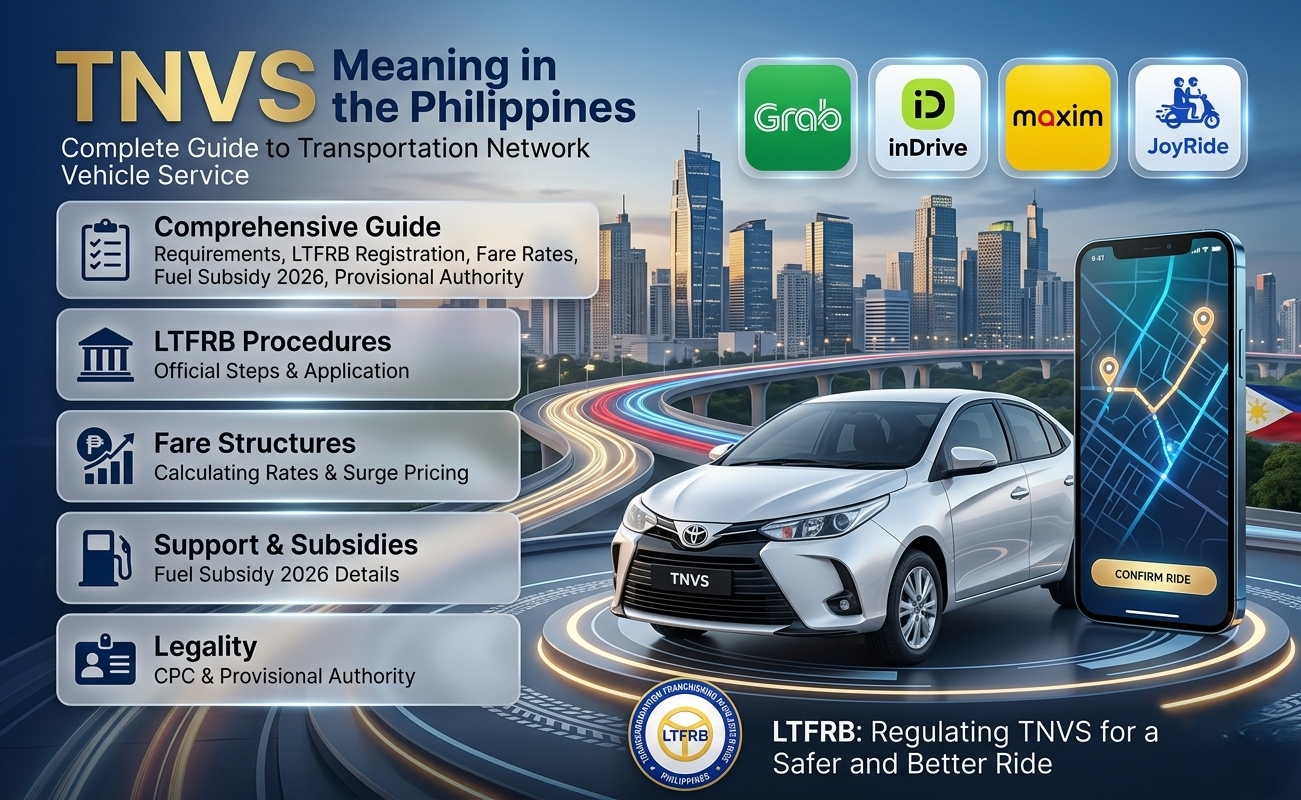
Transport Network Vehicle Service (TNVS) is the backbone of ride-hailing in the Philippines. Whether you want to drive for Grab or just need a safe ride home, understanding TNVS rules in 2026 is essential. This guide covers everything — from what TNVS means to how to apply, get your CPC, and claim your fuel subsidy.
What is TNVS? (TNVS Meaning & Core Concept)
What is the Meaning of TNVS? (Definition)
TNVS stands for Transport Network Vehicle Service. It refers to a private vehicle that is legally registered with the Land Transportation Franchising and Regulatory Board (LTFRB) to carry passengers for hire through a mobile app or online platform.
In simple terms, a TNVS unit is a car you can book through your phone — but one that has gone through proper government registration. Without that registration, the vehicle is illegal, also called “colorum.”
What Does TNVS Stand for in Tagalog?
In Tagalog, TNVS is commonly explained as “sasakyan na ginagamit para sa pagsakay na inirehistro sa LTFRB at naka-link sa isang app.” There is no official Tagalog translation, but Filipinos widely use the English acronym in everyday conversation.
What is a meaning TNVS Driver vs. Operator?
These two roles are different:
Understanding this difference matters during the application process because requirements differ for each role, similar to how a Temporary Operator’s Permit is issued under specific conditions.
What is the difference between TNC and Tnvs?
The Core Distinction
People often confuse TNVS and TNC. Here is the clear difference:
| Term | Full Form | Who/What It Refers To |
| TNVS | Transport Network Vehicle Service | The vehicle and its operator/driver |
| TNC | Transport Network Company | The app or platform company (e.g., Grab) |
Think of it this way: Grab is the TNC. Your Tnvs meaning Grab-accredited car is the TNVS.
What are TNC Companies in the Philippines?
Car / Four-Wheeler Apps
Motorcycle Taxis & Delivery
Legal Framework: Understanding LTFRB, PA, and CPC
The Role of LTFRB
The Land Transportation Franchising and Regulatory Board (LTFRB) is the government agency that controls all public transport franchises in the Philippines. For TNVS, the LTFRB sets vehicle standards, approves fares, issues franchises, and penalizes violators.
The LTFRB operates under the Department of Transportation (DOTr) and works alongside the Land Transportation Office (LTO), which handles vehicle registration and driver licensing.
What is Provisional Authority (PA) for TNVS?
A Provisional Authority (PA) is a temporary permit that allows a TNVS operator to legally provide transport services while waiting for the full Certificate of Public Convenience (CPC) to be processed.
Key facts about PA:
What is CPC TNVS Meaning?
CPC stands for Certificate of Public Convenience. It is the permanent franchise that gives a TNVS operator the full legal right to operate for hire tnvs in the Philippines.
Once a CPC is issued, the operator can legally:
Penalties for “Colorum” Operations
Operating a TNVS meaning lalamove without a valid PA or CPC is called colorum — an illegal act in the Philippines. Penalties include:
2026 DOTr Over-Cap Amnesty Updates
In 2025 and early 2026, the DOTr implemented an over-cap amnesty program to allow TNVS operator meaning whose vehicles exceeded the approved cap to regularize their status. Operators who qualified could apply for fresh accreditation without facing immediate penalties — provided they completed all documentary requirements within the amnesty window.
Check the official LTFRB website or their official Facebook page for the latest amnesty schedules.
How to Apply for TNVS: Step-by-Step LTFRB Requirements
Basic Requirements for Individual Applicants
Before anything else, prepare these documents:
Vehicle Requirements (TNVS Car Meaning)
Not every tnvs meaning car qualifies as a TNVS unit. The vehicle must meet these LTFRB standards:
Luxury vehicles (SUVs, sedans above a certain value) may qualify for premium TNVS categories.
Step-by-Step Online Registration via LTFRB TNVS Portal
TNVS Fare Structures, Regulations, and Surge Pricing
How Fares are Regulated
The LTFRB sets the minimum and maximum fares for TNVS rides. As of the latest order, base fares are calculated per kilometer and include a flagdown rate. TNCs like Grab must operate within these LTFRB-approved fare brackets.
LTFRB issues Memorandum Circulars (MCs) whenever fare adjustments are made — usually in response to fuel price changes or inflation.
Is Surge Pricing Legal for TNVS?
Yes — but only within limits. The LTFRB allows surge pricing up to a specific multiplier ceiling approved in the relevant MC taxi . Surge pricing that goes beyond the approved cap is a violation. Passengers can file complaints with the LTFRB if they believe a fare was overcharged.
LTFRB Cancellation Rules
Passengers who cancel a booking may be charged a cancellation fee, subject to LTFRB guidelines. Drivers who frequently cancel rides risk suspension from their TNC platform and possible LTFRB sanctions.
2026 TNVS Fuel Subsidy and Cash Relief Assistance (CRA)
The ₱5,000 Cash Relief Assistance (CRA)
The government, through the DOTr and LTFRB, has released Cash Relief Assistance (CRA) programs for qualified TNVS operators and drivers. In recent payouts, eligible individuals received ₱5,000 per beneficiary.
To qualify, a driver-operator must:
How to Check the LTFRB TNVS Master List PDF
The LTFRB releases the Master List of qualified CRA beneficiaries in PDF format. Here is how to find it:
Special Payouts for Discrepancies
If your name is misspelled or your accreditation number has an error in the Master List, the LTFRB has a discrepancy window — a short period where affected individuals can submit a correction request. Watch for LTFRB announcements on the official channels for these windows.
Benefits and Challenges Facing the TNVS Sector
Pros for Drivers and Passengers
For Drivers:
For Passengers:
Cons and Daily Hurdles
For Drivers:
For Passengers:
Frequently Asked Questions (FAQs)
Conclusion
TNVS is a legal and growing opportunity for Filipino Tnvs meaning drivers and a convenient option for passengers across the country. The key to success — whether you are applying for the first time or renewing your CPC — is to follow LTFRB rules carefully, keep your documents updated, and stay informed about new policies from the DOTr.
The 2026 landscape brings both challenges (caps, long processing) and opportunities (CRA payouts, amnesty windows). Use this guide as your starting point, then verify the latest requirements directly through the official LTFRB website or their verified government social media channels.