LTO Memorandum: Where to Check for LTO Memos, Notes, and Latest Circulars
If you own a vehicle in the Philippines, you have probably heard the word “memorandum” thrown around. Maybe a friend mentioned a new rule about plate numbers. Or maybe you saw a post online about license renewal deadlines. These updates usually come from an LTO memorandum.
But where do these memos come from? And where can you check them yourself instead of relying on rumors? This guide will walk you through everything you need to know about LTO memorandums temporary plate 2026 , the different types of LTO issuances, and the best places to find official updates.
What are LTO Issuances?
The Land Transportation Office (LTO) is the government agency in charge of vehicle registration, driver’s licenses, and road safety rules in the Philippines. To manage all of this, the LTO regularly releases official documents called issuances.
An issuance is simply a written rule, guideline, or announcement from the LTO. It tells the public, vehicle owners, and even LTO staff how to follow a certain policy. These issuances can cover anything from new Commemorative plate number designs to updated registration steps.
Not all issuances are the same, though. Some are called memorandums, others are circulars, and some are orders. Knowing the difference can help you understand how serious or how official a rule really is.
Key Types of LTO Issuances You Should Know
LTO issuances come in different forms. Each type has its own purpose and level of authority. Here are the main ones you should know about.
Memorandum vs Memorandum Circular
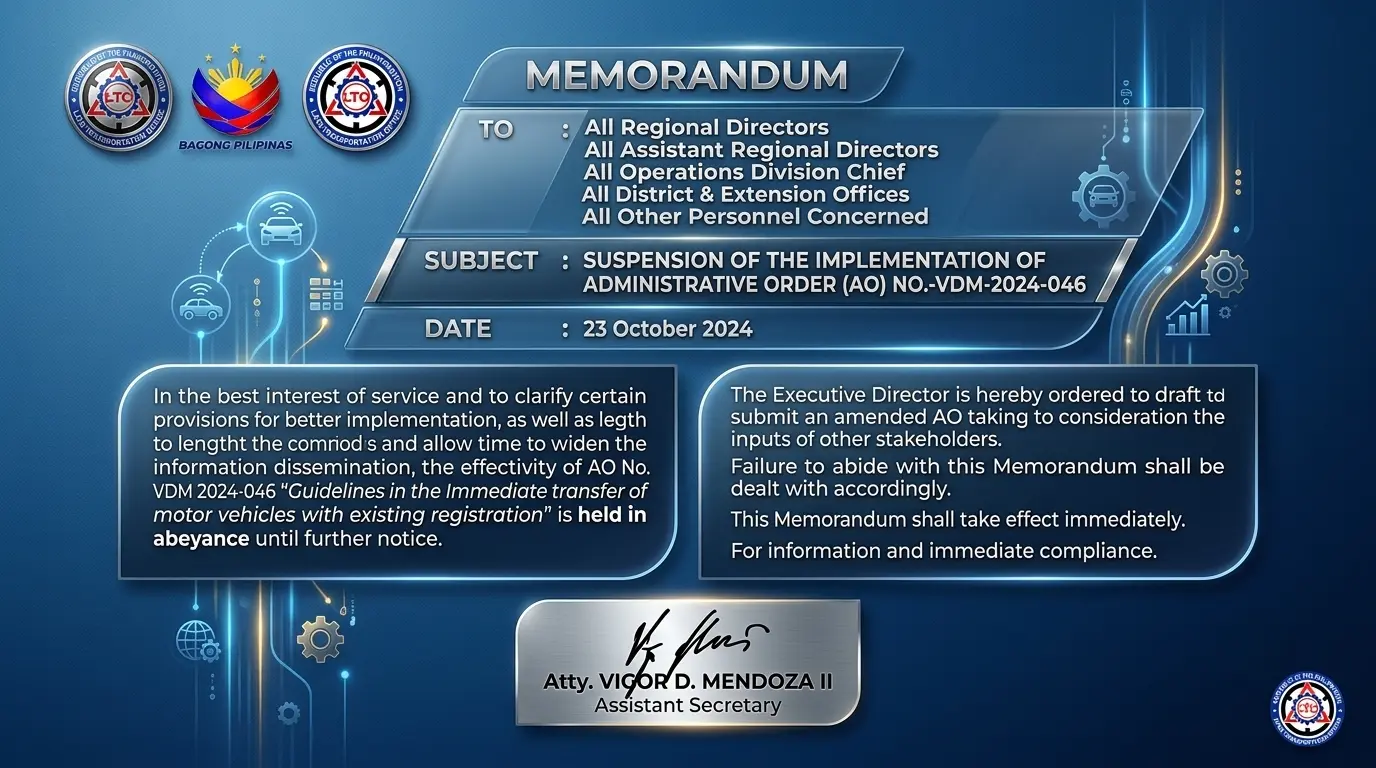
A memorandum is usually an internal instruction. It often tells LTO offices or employees how to carry out a task. A memorandum circular, on the other hand, is meant for wider use. It usually applies to the public and explains new policies that affect vehicle owners and drivers directly.
In short, think of a memorandum as an internal note, while a memorandum circular is more like a public announcement.
Department Order and Administrative Order
A Department Order (DO) comes from the Department of Transportation (DOTr), the agency that oversees the LTO. It usually covers bigger policy changes that affect more than one agency under DOTr.
An Administrative Order (AO) is similar but often focuses on how a specific rule should be carried out across government offices. Some recent transportation directives, including ones reportedly issued by the DOTr in 2026, have come in this form. Motorists should always check the LTO’s official channels to confirm the exact wording and effectivity date of any specific order before relying on it.
Republic Act (RA 4136 and RA 8794)
A Republic Act is a law passed by Congress, so it carries the highest level of authority among all these issuances.
Memorandums and circulars are usually created to help enforce these laws in a more detailed or updated way.
Office Order, Implementing Rules and Regulations, and Notice of Implementation
An Office Order is typically used within a specific LTO office to manage day-to-day operations.
Implementing Rules and Regulations (IRR) explain how a law or order should actually be applied. For example, a Joint DPWH-DOTC IRR might lay out detailed steps for enforcing a transportation-related rule that involves more than one government agency.
A Notice of Implementation tells the public exactly when a new rule will take effect. This is especially useful if you want to know the deadline for following a new policy.
Why You Need to Stay Updated with LTO Memorandums
You might be wondering why any of this matters to you as an ordinary driver or vehicle owner. Here are a few good reasons.
First, staying updated helps you avoid penalties. The LTO has a list of violations and corresponding fines for things like expired registration, unauthorized plate modifications, and missing documents. Knowing the latest rules can help you stay on the right side of the law.
Second, memorandums often contain helpful extensions or grace periods. For example, if the LTO extends a renewal deadline, you would only know this by checking the latest memo. Without this information, you might pay unnecessary penalties or rush an application that did not need to be rushed.
Third, new memorandums can affect how you modify or use your vehicle. Rules about plate numbers, aftermarket parts, and electric bikes have all changed in recent years. If you are not updated, you risk getting flagged during a checkpoint or vehicle inspection.
Where and How to Find Official LTO Memos and Notes
Now that you know why these documents matter, let’s talk about where to actually find them.
LTMS Portal and LTO’s Official Website
The most reliable place to check official memos is the LTO’s official website. This is where the agency usually uploads PDF copies of new circulars and memorandums.
The LTMS Portal (Land Transportation Management System) is also a useful tool. While it is mainly used for online transactions like registration and license renewal, it sometimes includes announcements related to new policies, especially ones that affect online transactions.
Centralized Government Portals
Some memorandums, especially those tied to laws or interagency rules, may also appear on centralized government websites, such as the Official Gazette. This is particularly true for documents that involve multiple departments, like a joint memo between the LTO and the Department of Public Works and Highways (DPWH).
Local LTO Offices
If you are not confident using online sources, you can always visit your local LTO office. Staff members can explain current memos and how they apply to your situation. This is especially helpful for older drivers or those who are not used to checking government websites.
Latest LTO Memorandums You Should Know About
Several recent topics have become common questions among Filipino drivers. Here is a simple breakdown of what each one generally covers. Since some specific dates and figures are still being confirmed across different sources, treat any exact deadlines mentioned here as a starting point, and always verify directly with the LTO before making decisions.
LTO Memorandum 2026 for License Extensions
Memorandums about license extensions usually apply to drivers and conductors whose licenses have expired or are close to expiring. These memos may also introduce or update digital driver’s license options through the LTMS portal, allowing some drivers to use an electronic ID instead of a physical card.
There have also been reports of renewal deadline extensions linked to a security paper shortage affecting the printing of physical licenses and registration cards. If you have heard about a deadline such as July 31, 2026, it is best to confirm this directly through the LTO’s official channels, since such dates can be adjusted.
LTO Memorandum on Plate Numbers and Temporary Plates
This topic covers rules on using temporary plates while waiting for your permanent plate number. It also includes guidelines for improvised plate numbers, which are sometimes allowed temporarily under specific conditions set by the LTO.
Brand-new motor vehicles are typically given registration validity of three years before their first renewal, based on existing LTO guidelines. There is also a “No Plate, No Travel” policy, which means vehicles without proper plates may not be allowed on public roads.
LTO Memorandum for Registration and Transfer of Ownership
Many drivers search for memos related to registration extensions and transfer of ownership, especially when buying or selling a used vehicle. These memos generally explain the required documents, such as the deed of sale and updated official receipts, needed to legally transfer a vehicle to a new owner.
The LTO also has a motor vehicle renewal schedule, which determines when a vehicle is due for registration renewal based on its plate number or registration history.
LTO Memorandum on Motorcycle Modifications
Motorcycle owners often look for memos about modifications like aftermarket pipes, modified mufflers, and additional lighting. These memos usually set limits on noise levels and specify which modifications are allowed or banned.
Common topics covered include:
If you plan to modify your motorcycle, checking the latest LTO memo first can help you avoid fines during inspection or at checkpoints.
LTO Memorandum for E-Bikes
As electric bikes have become more popular, the LTO has issued guidance covering how these vehicles should be registered and used on public roads. These memos generally clarify whether a specific type of e-bike needs LTO registration, and what safety standards apply.
Since e-bike regulations are still evolving, it is a good idea to check the latest memo before buying or using one, especially if you plan to ride on public roads regularly.
How to Verify an Authentic LTO Memorandum
With so much information being shared online, it is important to know how to confirm if a memorandum is real. Here is a simple checklist:
The LTO has also warned the public against fake certificates and unauthorized fixers who claim to speed up transactions using fabricated documents. If someone offers you a shortcut using an unofficial memo or certificate, it is best to verify directly with the LTO before paying anything.
Frequently Asked Questions
Conclusion and Summary
LTO memorandums may seem confusing at first, especially with so many types of issuances like memorandums, circulars, and administrative orders. But once you understand the basics, checking for updates becomes much easier.
The key takeaway is simple: always rely on official sources like the LTO website, the LTMS portal, or your local LTO office. Avoid depending on rumors or unverified posts, especially when it comes to deadlines, fees, or penalties. Staying updated not only helps you avoid fines but also makes your registration and licensing transactions much smoother.
LTO Official Contact Information
For direct inquiries, you can reach the Land Transportation Office through their official website or visit your nearest LTO district office. If you need to verify a specific memorandum or report a suspected fake document, it is best to contact the LTO directly rather than relying on third-party sources or fixers.