LTO-Accredited Driving Schools in the Philippines (2026 Complete Guide)
Getting your driver’s license in the Philippines is an exciting milestone. However, the process requires strict legal steps before you can legally hit the road. The Land Transportation Office (LTO) mandates that all aspiring drivers must undergo official training. You cannot just ask a family member to teach you and expect to get a license.
To secure your student permit and driver’s license, you must complete your courses at an official LTO-accredited driving school. This comprehensive 2026 guide covers everything you need to know about accredited institutions, course types, fees, regional locations, and step-by-step registration processes.
What Is an LTO-Accredited Driving School?
An LTO-accredited driving school is a private or public educational institution officially permitted by the Land Transportation Office to conduct driving seminars and practical lessons. These schools must meet strict national standards. The LTO checks their facilities, vehicles, and curriculum before issuing an official accreditation Plate number.
The LTO categorizes these schools using specific technical standards across three tiers:
Every authorized school employs certified driving instructors who have passed rigorous LTO examinations. When you complete a course at these schools, they upload your graduation certificate directly to the LTO system.
Why LTO Accreditation Matters for New Drivers
Enrolling in an accredited school is not just a good idea—it is a legal necessity. Here is why choosing an accredited school matters:
Types of Courses Offered
LTO-accredited driving schools offer two primary courses. You must complete these in a specific order to transition from a zero-experience individual to a licensed driver.
Theoretical Driving Course (TDC)
The Theoretical Driving Course (TDC) is your first step. It focuses entirely on classroom learning, covering road rules, traffic signs, fines, and emergency procedures.
Practical Driving Course (PDC)
The Practical Driving Course (PDC) is the hands-on phase where you get behind the wheel. You will practice starting, parking, steering, changing lanes, and navigating active Philippine traffic under instructor supervision.
TDC vs PDC – Key Differences
| Feature | Theoretical Driving Course (TDC) | Practical Driving Course (PDC) |
| Primary Focus | Traffic laws, signs, and psychology | Hands-on driving and vehicle control |
| Minimum Hours | 15 Hours | 8 Hours (per restriction code) |
| LTO Target | Mandatory for Student Permit | Mandatory for New Driver’s License |
| Learning Setting | Classroom lecture or online modules | Inside an active training vehicle |
| Testing Method | Written evaluation exam | Actual road-driving assessment |
Who Needs to Enroll in an LTO-Accredited Driving School?
You must enroll in an accredited driving school if you fall into any of these categories:
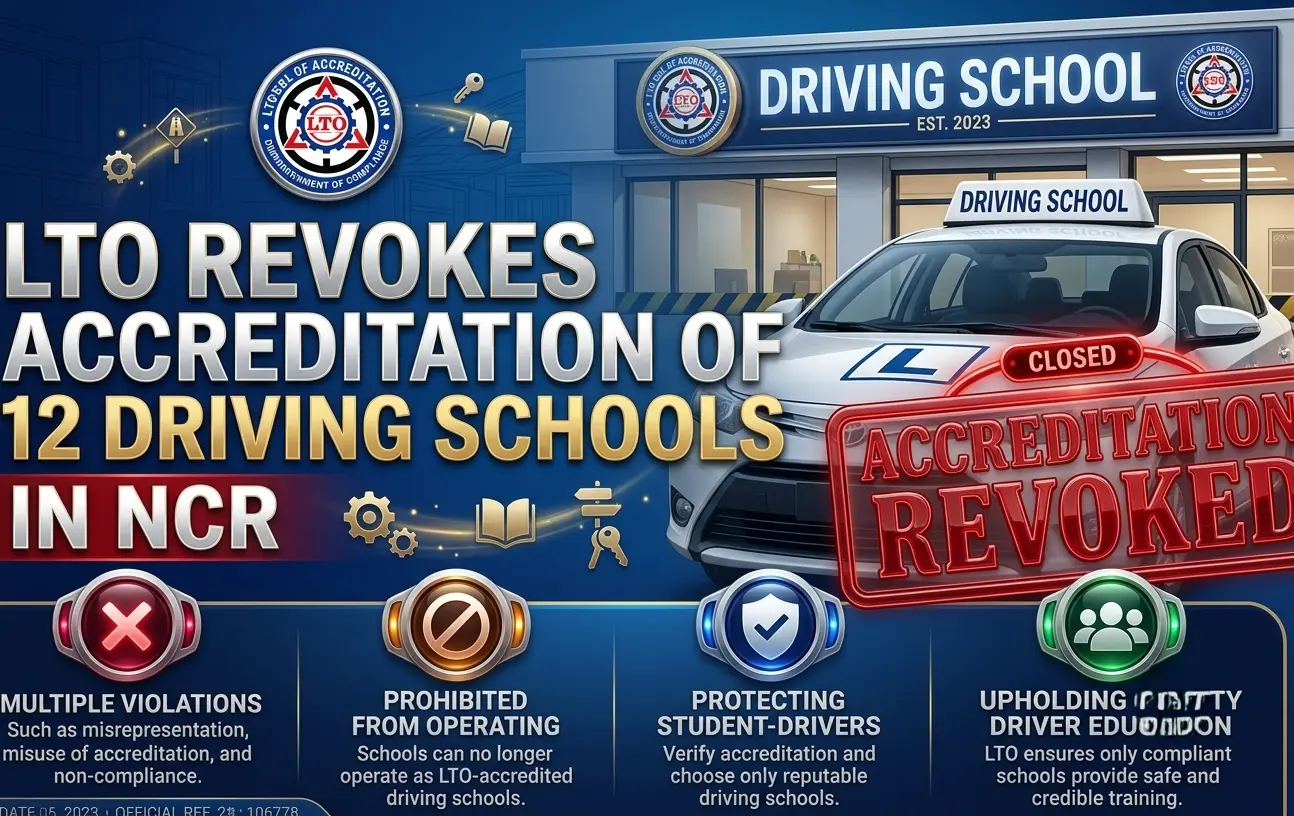
How to Verify if a Driving School Is LTO-Accredited
Fake driving certificates are a common issue in the Philippines. To protect your money and time, use these verification steps before paying any tuition fees:
Complete List of LTO-Accredited Driving Schools by Region
The LTO maintains hundreds of authorized branches nationwide. Major national chains like A1 Driving School, Smart Driving School, and Honda Safety Driving Center operate branches across multiple regions. Below is the regional directory guide where you can find accredited facilities.
NCR – East
Servicing areas like Quezon City, Pasig, Marikina, and San Juan. Popular locations include 2EZ Driving School at 12 Mercedes Avenue, San Miguel, Pasig City, alongside widespread Smart Driving School hubs in QC.
NCR – West
Covering Manila, Pasay, Makati, Caloocan, and Malabon. Large scale A1 Driving School centers operate prominently inside major malls across these districts.
Region I
Covers Ilocos Norte, Ilocos Sur, La Union, and Pangasinan. Local options provide comprehensive provincial coverage in Dagupan and San Fernando.
Region II
Covers Cagayan Valley, Isabela, Nueva Vizcaya, and Quirino. Accredited centers are stationed mostly around Tuguegarao and Santiago City.
Region III
Covers Central Luzon including Bulacan, Pampanga, Tarlac, Bataan, Nueva Ecija, and Zambales. High concentration centers exist in San Fernando and Malolos.
Region IV-A
Covers CALABARZON (Cavite, Laguna, Batangas, Rizal, and Quezon). This high-volume traffic zone features specialized centers in Bacoor, Lipa City, and Calamba.
Region IV-B
Covers MIMAROPA (Mindoro, Marinduque, Romblon, and Palawan). Primary driving academies are concentrated in Puerto Princesa and Calapan.
Region V
Covers the Bicol Region, including Camarines Sur, Albay, and Sorsogon. Driving institutes operate widely across Naga City and Legazpi.
Region VI
Covers Western Visayas, including Iloilo, Negros Occidental, and Aklan. Main instruction locations are clustered tightly around Iloilo City and Bacolod.
Region VII
Covers Central Visayas, including Cebu and Bohol. A1 Driving and local providers run major training facilities within Cebu City and Mandaue.
Region VIII
Covers Eastern Visayas, including Leyte and Samar. Registered driving clinics operate out of Tacloban City and Ormoc.
Region IX
Covers the Zamboanga Peninsula. Accessible facilities operate primarily inside Zamboanga City and Pagadian.
Region X
Covers Northern Mindanao, featuring Misamis Oriental and Bukidnon. Top choices are situated within Cagayan de Oro (CDO).
Region XI
Covers the Davao Region. Reputable schools are distributed across Davao City and Tagum City.
Region XII
Covers SOCCSKSARGEN, including South Cotabato and North Cotabato. Most hubs operate out of General Santos City (Gensan).
CAR
Covers the Cordillera Administrative Region. Mountain driving centers operate out of Baguio City to teach high-altitude driving skills.
CARAGA
Covers northeastern Mindanao, including Agusan and Surigao. Main instruction units operate within Butuan City.
BARMM
Covers the Bangsamoro Autonomous Region in Muslim Mindanao. Authorized schools operate inside Cotabato City and Marawi.
How to Enroll – Step-by-Step Process
Follow this seamless roadmap to complete your driving school enrollment legally:
Step 1: Choose an Accredited School -> Step 2: Submit Requirements -> Step 3: Attend & Pass TDC -> Step 4: Complete Practical Lessons (PDC) -> Step 5: Secure Certificates
Step 1: Choose an Accredited School -> Step 2: Submit Requirements -> Step 3: Attend & Pass TDC -> Step 4: Complete Practical Lessons (PDC) -> Step 5: Secure Certificates
Course Fees and Duration
Prices vary by region, school level, and vehicle type. Below is an average cost estimate for 2026:
Theoretical Driving Course (TDC)
Practical Driving Course (PDC)
What to Bring During Driving Lessons
When attending your physical driving modules, ensure you bring these items for a smooth session:
LTO Certificates and LTMS Portal Upload
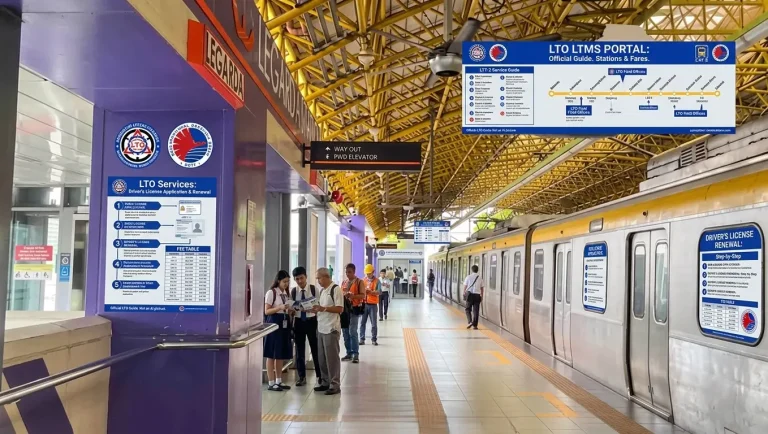
The days of paper-only certificates are gone. The LTO uses the modern digital Land Transportation Management System (LTMS).
Once you pass your driving school assessments, the school’s registrar uploads your graduation data directly into your personal LTMS portal account using their secure accreditation credentials.
Important Note: Always double-check that your full name and birthday on your driving school registration match your official government IDs perfectly. If there is a typo, the driving school’s electronic system will fail to sync with your LTO portal account, delaying your application.
How to Choose the Best Driving School
Key Factors to Consider
Common Mistakes & Red Flags to Avoid
Best Tips for First-Time Drivers
Frequently Asked Questions
Conclusion
Enrolling in an LTO-accredited driving school is your path to becoming a safe, legally compliant driver in the Philippines. By completing your 15-hour TDC and 8-hour PDC, you protect your safety and ensure your certificates upload smoothly to the official LTMS portal.
Avoid shortcuts, select a reputable certified school near your area, and focus on building solid defensive driving habits. Stay safe on the road!